

Editable Backlinks Are Transforming How Gardening Blogs Grow Their Audience
Claim your spot in gardening resource roundups by reaching out to established garden bloggers who maintain “best of” lists and offering your expertise in exchange for an editable link back to your site. Many seasoned gardeners actively seek fresh voices to feature, and this collaborative approach builds genuine connections while securing valuable backlinks you can buy quality backlinks or earn through quality contributions, ensuring the hosting site permits periodic anchor text adjustments so you can redirect traffic as your blog’s focus sharpens or trending topics shift.
Guest post on complementary gardening platforms with author bio sections that allow link modifications, focusing on topics like companion planting tutorials, seasonal prep guides, or urban container gardening solutions. When you contribute content and secure these placements, verify that updates remain possible as your content evolves.
Participate actively in gardening forums and community directories that feature member profiles with customizable link fields. Sites like GardenWeb, local gardening clubs, and sustainable living networks often welcome engaged members who answer questions and share seasonal tips, rewarding participation with editable profile links that grow more valuable as your authority increases.
Create shareable resources like printable planting calendars, companion planting charts, or pest identification guides that other bloggers will naturally reference. Include embed codes with attribution links you control through platforms like Canva or Google Drive, allowing you to track performance and adjust targeting without requiring collaborators to manually update their posts.
Exchange links with fellow gardening content creators through formalized partnerships where both parties agree to maintain editable linking arrangements, creating a supportive network that adapts as everyone’s content strategies mature and audience needs evolve throughout growing seasons.
What Makes Editable Backlinks Different (And Why Gardening Bloggers Need Them)
The Flexibility Factor for Seasonal Content
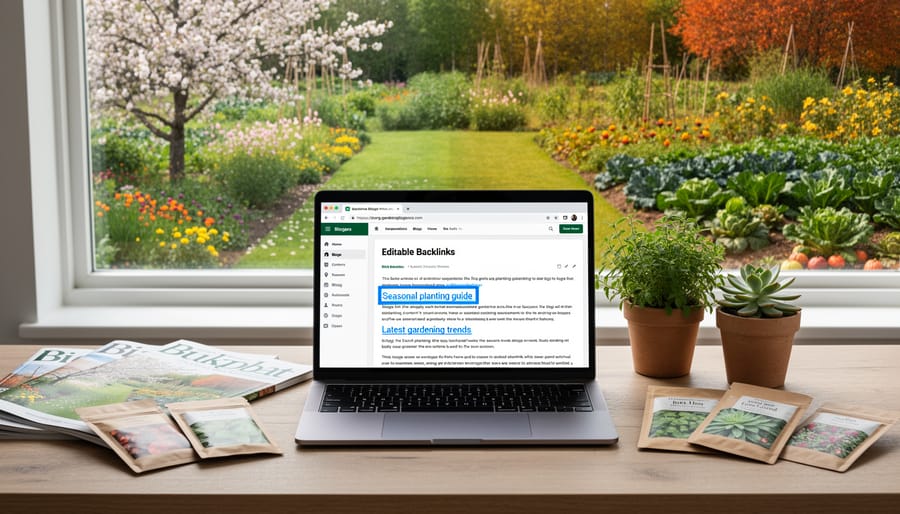
Here’s the beauty of editable backlinks: they grow and change with your garden’s seasons! When you establish editable backlinks, you’re creating living links that can adapt as your content evolves throughout the year. Imagine you’ve built valuable backlinks pointing to your winter gardening content during December. As spring approaches, you can update those same links to direct readers toward your fresh spring planting guides without starting from scratch.
This flexibility is a game-changer for gardening bloggers. Instead of watching your hard-earned link equity sit with dormant seasonal content, you can redirect that SEO power to timely, relevant posts. Your October composting tutorial can seamlessly transition to November frost protection tips, keeping readers engaged year-round.
The process is simple and empowering. Update your landing pages to reflect current growing seasons, or adjust your linking partners’ anchor text to match what gardeners are actually searching for right now. You’re not losing those precious backlinks; you’re making them work harder for you. This approach keeps your content fresh, relevant, and perfectly aligned with what your community needs in each unique growing season.
Keeping Your Garden Content Fresh Without Starting Over
Your gardening blog has evolved, and that’s something to celebrate! Maybe you started writing about traditional in-ground vegetable patches, but now your passion lies in vertical gardens and container growing. Here’s the beauty of editable backlinks: you don’t need to start from scratch when your focus shifts.
Think of editable backlinks as living connections that grow with your content. When you’ve built relationships through guest posts, resource pages, or collaborative content, you can update those links as your blog evolves. For instance, if a popular gardening directory originally linked to your general composting article, you can request they update it to your new piece on small-space composting solutions.
This flexibility is particularly valuable for gardening content because our understanding and interests naturally develop. Perhaps your early soil testing guides now complement specialized content about container soil management. Instead of losing that valuable link equity you worked hard to earn, simply reach out to your linking partners with a friendly update.
The key is maintaining those genuine relationships within the gardening community. When you’ve been helpful and collaborative, most bloggers are happy to update links to better serve their readers with your freshest, most relevant content.
Where to Find Editable Backlink Opportunities for Your Gardening Blog
Community Gardens and Local Organization Directories
Community gardens and local sustainability organizations maintain resource pages that are goldmines for editable backlinks. These directories welcome submissions from gardening blogs because they genuinely want to share helpful content with their members. Start by searching for “community garden” + “your city” + “resources” or “local garden club directory” to find these opportunities.
When you discover a relevant directory, look for “Submit a Resource,” “Suggest a Link,” or “Contact Us” pages. Many garden clubs operate on volunteer power, so make their job easy! Send a friendly email introducing yourself as a fellow gardening enthusiast and briefly explain how your blog could benefit their community. For example, if you’ve written about container gardening for balconies, mention how it relates to their urban gardening members.
Here’s your action step: identify three local gardening organizations this week and reach out with specific article suggestions. Reference a recent event or initiative from their website to show you’re genuinely engaged with their mission. This personalized approach transforms a cold outreach into a warm community connection. These backlinks not only boost your SEO but also connect you with local gardeners who might become loyal readers and contributors to your blog’s growing community.
Guest Posting on Home Improvement and Lifestyle Platforms
Guest posting opens wonderful opportunities to connect with readers beyond your immediate gardening community while building those valuable editable backlinks. Focus your efforts on home improvement blogs, sustainable living platforms, and wellness websites where gardening naturally intersects with their audience’s interests. These sites often welcome contributions about creating beautiful outdoor garden spaces, composting for beginners, or growing herbs for natural remedies.
When pitching guest posts, propose topics that benefit their readers while naturally incorporating your expertise. For example, a home improvement site might love an article on budget-friendly patio garden makeovers, while a wellness blog could feature your piece on stress-reducing container gardens. Always review their guest posting guidelines and ensure they allow author bio sections with customizable links.
The real magic happens because these bio links typically remain editable through author accounts or content management systems. You can update your link destinations as your blog evolves, directing traffic to seasonal content or new resources. Build genuine relationships with editors by delivering quality content consistently, and you’ll establish a network of platforms where your backlinks serve you long-term.
Resource Pages and Curated Gardening Lists
Resource pages are goldmines for gardening bloggers looking to build quality backlinks. These curated lists—like “Best Urban Gardening Resources” or “Top Composting Guides”—are specifically designed to help readers find valuable content, and the best part? Many site owners update them regularly and welcome suggestions.
Start by searching for phrases like “gardening resources,” “best gardening blogs,” or “urban gardening links” plus your specific niche. When you find a promising list, take time to explore it. Does it feature blogs similar to yours? Are the links current, or do you spot outdated resources? This tells you whether the curator actively maintains their page.
Before reaching out, engage authentically with their content. Leave thoughtful comments, share their posts, or participate in their community. When you’re ready to pitch, craft a friendly, personalized email. Reference specific resources you loved on their page and explain how your content fills a gap or offers fresh perspective. For example: “I noticed your composting section is fantastic! I recently published a guide on apartment composting that your readers might find helpful.”
Keep your pitch conversational and benefit-focused. You’re not just asking for a link—you’re offering value to their audience. Most gardening site owners genuinely want to help their community discover great resources, so approach this as collaboration rather than transaction. Follow up politely if you don’t hear back within two weeks, and always express gratitude whether they add your link or not.
Building Your Own Editable Backlink Network
The Garden Blogger Exchange Approach
One of the most rewarding ways to build editable backlinks is through blogger exchanges, where you collaborate with fellow garden enthusiasts to create mutual value. This approach transforms link-building from a transactional task into genuine community connection.
Start by identifying 5-10 gardening bloggers whose content complements yours without directly competing. If you focus on container gardening, look for writers covering composting, seed starting, or garden design. Reach out with a personalized message explaining what you admire about their work and propose a content exchange where you’ll write a guest post for their site while they contribute to yours.
The key is establishing upfront that these will be editable backlinks. Frame this positively: “I’d love to include relevant links in my guest post, and of course you’re welcome to edit them if they don’t fit your content strategy.” This transparency builds trust and shows you respect their editorial control.
Create a simple exchange agreement covering deadlines, word counts, and link guidelines. Most gardeners appreciate structure that keeps things friendly and professional. Consider forming a small blogger circle that meets quarterly to share content ideas and exchange opportunities.
This collaborative approach not only builds backlinks but creates lasting relationships. You’ll find yourself with a support network of fellow gardeners who genuinely want to see each other succeed, making the entire blogging journey more enjoyable and sustainable.
Cross-Niche Collaborations That Actually Work
Think beyond the obvious when building editable backlink partnerships! Photography bloggers are natural allies for gardening content creators. Reach out to shutterbugs who specialize in macro flower shots or landscape photography, offering guest posts about creating picture-perfect garden compositions. Your stunning seasonal plant photos can illustrate their tutorials while their technical photography advice helps your readers capture better garden memories.
Sustainable living sites offer incredible collaboration potential too. These platforms naturally align with organic gardening practices, composting methods, and water conservation techniques. Propose exchanging therapeutic gardening content for their wellness sections while they contribute articles about reducing household waste through home gardening. Both audiences benefit from this cross-pollination of ideas.
Home improvement platforms present another winning opportunity. DIY enthusiasts building raised beds, installing irrigation systems, or constructing vertical gardens need your planting expertise, while their building tutorials help your community tackle garden infrastructure projects. Create reciprocal content series where you handle the plant selection and care advice while they provide the construction know-how.
The key is finding partners whose audiences overlap naturally with yours. Start conversations emphasizing mutual value rather than just link exchanges. When collaborations genuinely serve both communities, those editable backlinks become powerful, lasting connections that search engines reward.
How to Maintain and Optimize Your Editable Backlinks
Create a Simple Backlink Tracking System
You don’t need fancy software to track your backlinks effectively! Start with a simple spreadsheet where you can record essential details about each editable backlink you’ve earned. Create columns for the website name, URL where your link appears, contact person, date acquired, and anchor text used. Add a column for seasonal relevance too—if you’ve got a link on a spring bulb planting guide, you’ll want to check it before March rolls around.
Set up quarterly reminders in your calendar app to review your backlink spreadsheet. During these check-ins, verify that your links are still active and pointing to the right pages on your site. Garden websites often refresh their content seasonally, so links can disappear during updates. If you notice a broken link, reach out politely to the site owner—they usually appreciate the heads-up.
For those wanting slightly more automation, free tools like Google Sheets with notification features work wonderfully. You can color-code links based on their status: green for active, yellow for needs checking, and red for broken. This visual system makes it easy to prioritize your outreach efforts.
Consider creating a simple notes section where you record your relationship with each site owner. Did they mention wanting tomato-growing tips? Note it down! These personal touches help maintain genuine connections within the gardening community and make future collaborations feel natural rather than transactional.

When and How to Update Your Links
Think of your backlinks as living plants in your garden—they need attention and care as they grow! Regular updates keep your link network healthy and relevant, especially as your gardening content evolves throughout the seasons.
Start by reviewing your backlinks every three to six months. When you publish major updates like new seasonal guides tied to seasonal garden planning or revised plant care advice based on recent experience, reach out to sites linking to your older content. A friendly email explaining your updated resource gives them value while keeping your backlink fresh and accurate.
Seasonal changes offer perfect opportunities for updates. If your spring planting guide gets significant revisions with new companion planting strategies or updated zone information, notify your backlink partners. They’ll appreciate knowing their readers are getting the most current advice.
When rebranding content or combining multiple posts into comprehensive guides, systematically update your backlinks to point to new URLs. This prevents broken links and maintains the trust you’ve built within the gardening community. Keep a simple spreadsheet tracking where your backlinks live, making future updates manageable rather than overwhelming. Remember, partner sites want their content to stay relevant too, so most will gladly update links when you provide clear, helpful information about your improvements.
Nurturing Relationships with Link Partners
Building genuine connections with your link partners transforms a simple backlink strategy into a thriving gardening community! Start by reaching out with a friendly, personalized message when someone links to your content. A quick thank-you email acknowledging their support goes a long way in establishing rapport. Share their content on your social media channels and comment thoughtfully on their posts to show you’re genuinely engaged with their work, not just collecting links.
Consider creating a simple spreadsheet to track your link partners and set reminders to check in periodically. Share exciting updates like new planting guides or seasonal tips they might find valuable for their audiences. When you update content they’ve linked to, give them a heads-up so they know their readers will find fresh information.
Reciprocal support doesn’t mean obligatory linking, but rather authentic collaboration. Feature link partners in roundup posts, invite them to contribute guest content, or participate together in gardening challenges that encourage community interaction. This participatory approach strengthens bonds and often leads to naturally occurring backlinks. Remember, the gardening community thrives on mutual support, so approach these relationships with the same care you’d give your seedlings, nurturing them consistently for long-term growth.
Common Mistakes to Avoid with Editable Backlinks
Over-Optimization and Anchor Text Stuffing
Here’s the thing about anchor text: it should flow as naturally as the conversation you’d have with a fellow gardener at the community garden. When you’re editing those backlinks, resist the urge to cram in exact-match keywords every time. Instead of linking “organic tomato growing tips” repeatedly, mix it up with phrases like “this helpful guide,” “learn more here,” or “my favorite resource for tomatoes.”
Think of over-optimization like overwatering your plants—too much of a good thing becomes harmful. A profile that reads “best gardening blog,” “top gardening advice,” “gardening tips expert” looks forced and artificial to both readers and search engines. Aim for variety: blend branded anchors (your blog name), generic phrases (“check this out”), and naturally worded descriptive links.
For gardening blogs specifically, try anchors like “Sarah’s companion planting guide” or “this article about balcony herb gardens” rather than stuffing keywords. Your backlink profile should look like a diverse garden ecosystem, not a monoculture plantation. When in doubt, read your anchor text aloud—if it sounds awkward or robotic, your readers will notice too!
Neglecting the Human Element
Here’s a truth that’s easy to forget when chasing backlinks: you’re building relationships with real gardeners, not just collecting URLs. The most successful editable backlink strategies bloom from genuine connections within the gardening community. When you approach blog owners only as stepping stones for SEO, it shows—and it damages your reputation faster than aphids on rosebushes.
Think of editable backlinks as you would a community garden plot. You wouldn’t just show up, plant your seeds, and disappear, right? You’d chat with fellow gardeners, share surplus tomatoes, swap propagation tips, and help water when someone’s on vacation. Apply this same neighborly spirit to your backlink outreach. Comment thoughtfully on other blogs, share their content enthusiastically, and offer value before asking for anything in return.
When you focus on building authentic relationships, those editable backlinks become natural byproducts of mutual support rather than awkward transactions. Your fellow garden bloggers become collaborators who genuinely want to link to your content because they trust you and value what you contribute to the community.
You’ve made it this far, and that’s something to celebrate! Understanding editable backlinks might feel like learning a new gardening technique—a bit uncertain at first, but incredibly rewarding once you see the growth. The beauty of this strategy is that it doesn’t require a complete overhaul of your blogging approach. Start small. Choose just one or two strategies that resonate with you, whether that’s reaching out to a fellow gardening blogger for a guest post exchange or updating an existing resource page with fresh links.
Remember, the heart of successful backlink building mirrors what makes gardening communities so special: genuine connection and mutual support. When you focus on creating valuable content and building authentic relationships with other garden enthusiasts, those editable backlinks naturally follow. You’re not just improving your search rankings; you’re weaving yourself into a vibrant network of growers, experimenters, and plant lovers who share your passion.
Ready to dig in? Pick one strategy from this guide and commit to trying it this week. Share your experience in the comments below or connect with fellow gardening bloggers who are on this same journey. Together, we’ll cultivate not just beautiful gardens, but thriving online spaces where everyone can learn and grow.

